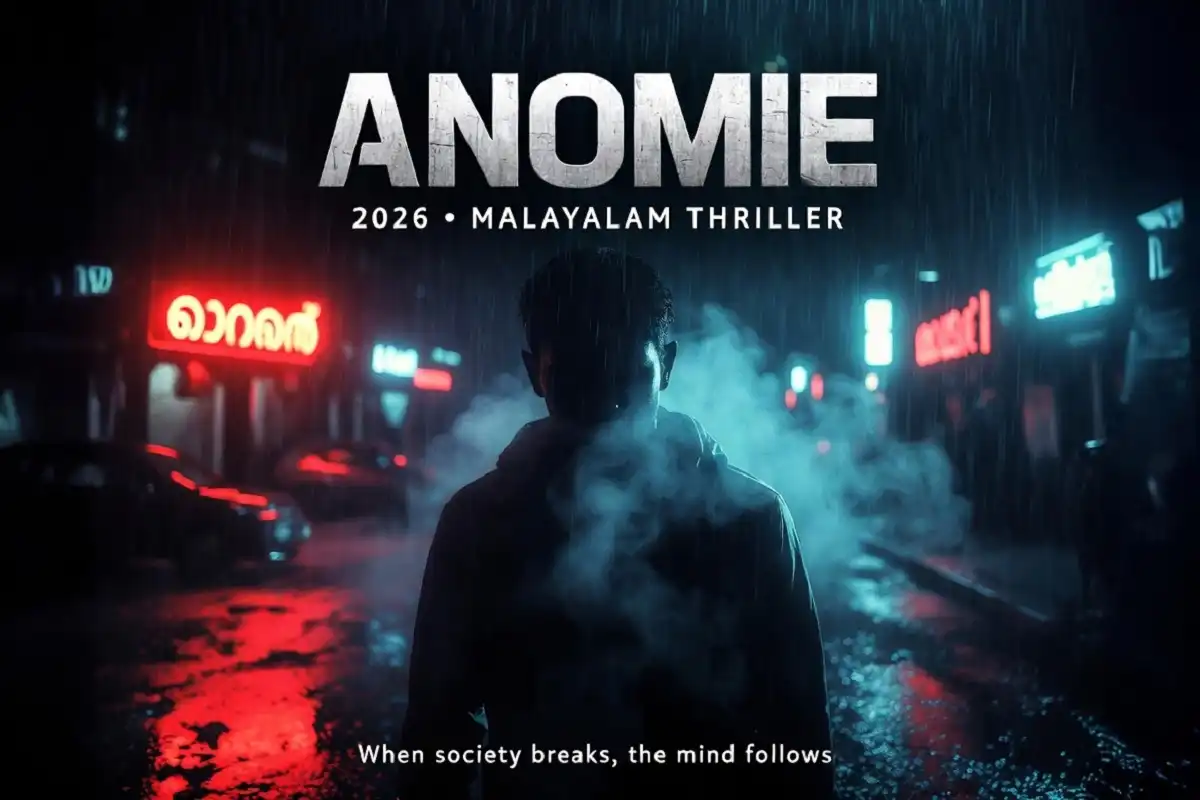
Anomie Malayalam Movie Review: Cast and Verdict
Malayalam cinema has been exploring darker and more complex storytelling in recent years, and Anomie fits neatly into that growing trend. Released on February 6, 2026, this psychological crime thriller marks the directorial debut of Riyas Marath and brings Bhavana back to the Malayalam screen in a meaningful leading role. Backed by a moody visual style, a bold premise, and a composer making his Malayalam debut, the film arrives with genuine ambition. But does it fully deliver on its promise? Here is a detailed breakdown to help you decide.
What Is Anomie About?
The story centers on Zara, a forensic expert played by Bhavana, whose younger brother Ziyan suddenly goes missing. As Zara begins her own independent search for answers, a police investigation into the disappearance runs parallel to her efforts. The two tracks eventually converge, revealing a darker and wider conspiracy involving people with similar vulnerabilities who have been targeted and killed.
The central conflict unfolds across two investigative threads: one personal and one procedural. Zara drives the emotional core of the story as a sister determined to find her brother at any cost. Rahman plays Ghibran, a police officer carrying the weight of a past investigation he failed to resolve, who takes on the official inquiry.
The title itself, “Anomie,” refers to a sociological concept describing a breakdown of social norms and the disconnection individuals feel from their community. This theme runs beneath the surface of the narrative, particularly in how the victims are profiled and how the villain’s philosophy is constructed.
Cast and Performances
Bhavana as Zara
Bhavana delivers one of the more grounded and composed performances in the film. Known earlier for lighter roles in Malayalam cinema, she handles the emotional weight of this character with visible care. Zara is a woman under enormous personal pressure, and Bhavana communicates that with restraint rather than overstatement. Her comeback to Malayalam films through this role is a confident one, and fans of her earlier work will be glad to see her in a part that challenges her range.
Rahman as Ghibran
Rahman plays Ghibran, a veteran investigator marked by guilt over a case he could not solve. The character has an interesting foundation on paper, designed to carry both action and emotional complexity. In the first half, his performance struggles to fully express the trauma the character is said to carry. The second half gives him more room to act, and he handles the physical demands of the role effectively. Overall, it is a performance with stronger moments but uneven consistency throughout.
The Supporting Cast
The supporting ensemble contributes meaningfully to the film’s progression. Shebin Benson plays Ziyan, the missing brother, and brings a quiet fragility to the role. Arjun Lal takes on a significant part within the plot, and Vishnu Agasthya, Binu Pappu, and Drishya Raghunath round out a capable supporting lineup. Binu Pappu appears as a senior forensic surgeon, and his presence adds a layer of procedural authenticity to the investigation scenes.
Direction and Screenplay
Riyas Marath’s Directorial Debut
Riyas Marath, who previously co-wrote films including Neeli and Diwanji Moola Grand Prix, steps into the director’s chair for the first time here. His intent is clearly ambitious: he wants to blend psychological science, sociological ideas, and genre thriller craft into one package. The film’s visual language and overall aesthetic show that he has a clear cinematic sensibility. The opening portions of the film establish a brooding tone that catches the attention.
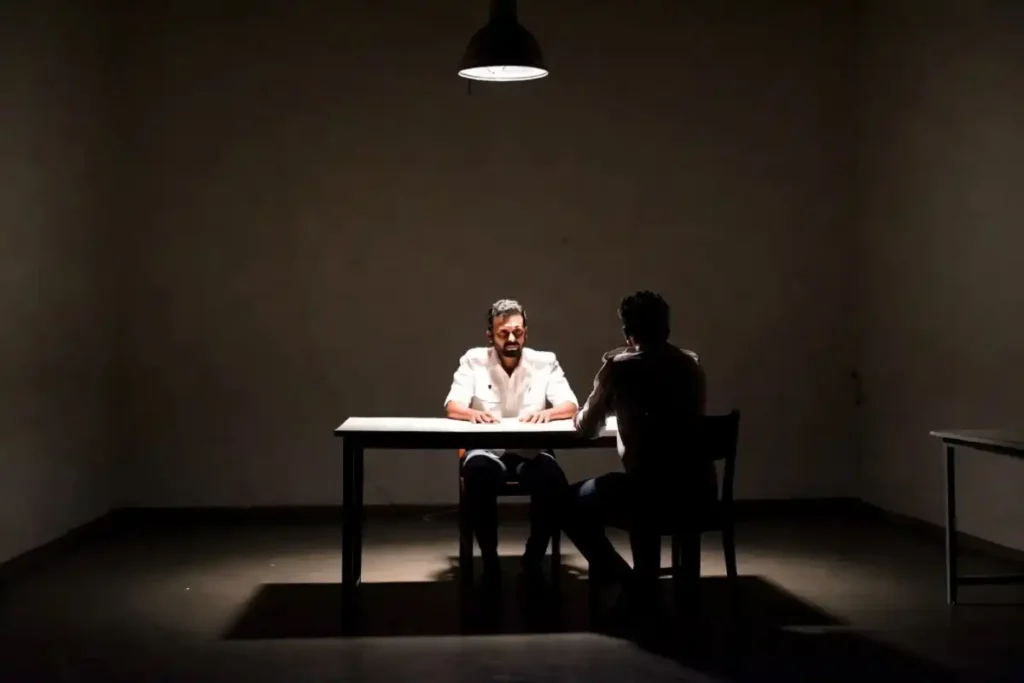
However, the screenplay carries noticeable weaknesses. The first half moves at a measured pace that, at times, tips into sluggishness. The second half gains momentum but relies on action sequences and chases that do not always serve the story’s core ideas. The thriller elements begin to feel more generic as the film progresses, pulling focus away from the more original philosophical elements introduced earlier.
The Screenplay’s Strengths and Weaknesses
Where Anomie earns genuine credit is in its villain’s philosophy and the conceptual core of the threat. The idea connecting the victims, rooted in specific psychological and medical conditions, is a fresh angle for a Malayalam crime thriller. The film’s research into this area shows, and it is the element that most distinguishes Anomie from a routine investigation drama.
The weaknesses emerge when the script leans on familiar genre conventions to fill the space between its stronger ideas. Some scenes feel like padding, and the climax, while functional, does not land with the emotional or narrative punch that the setup seems to promise.
Visuals and Music
Sujith Sarang’s Cinematography
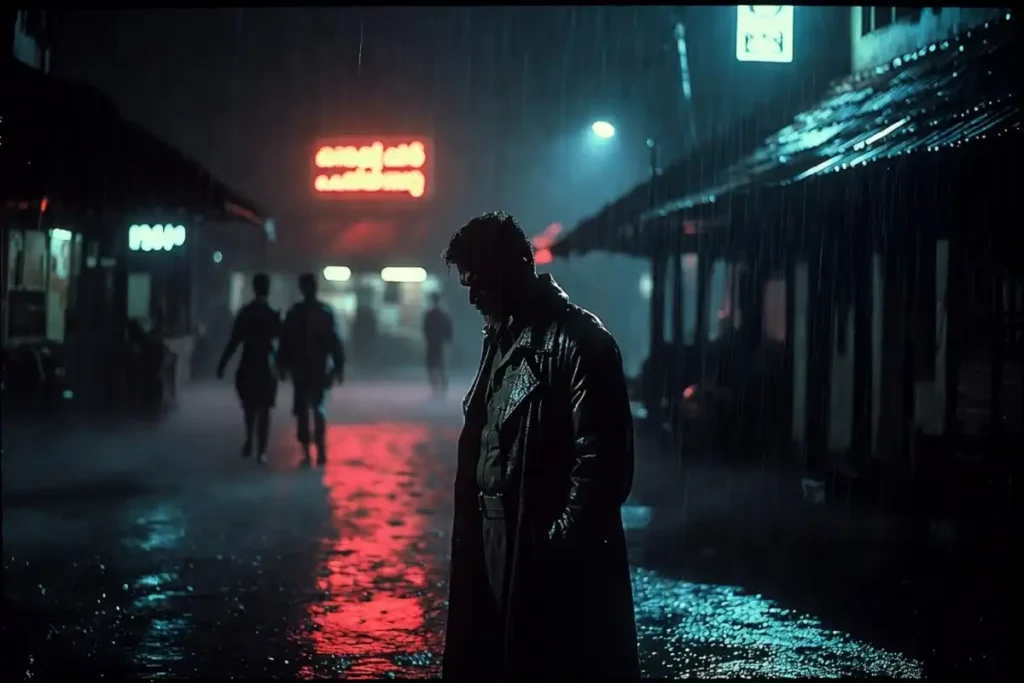
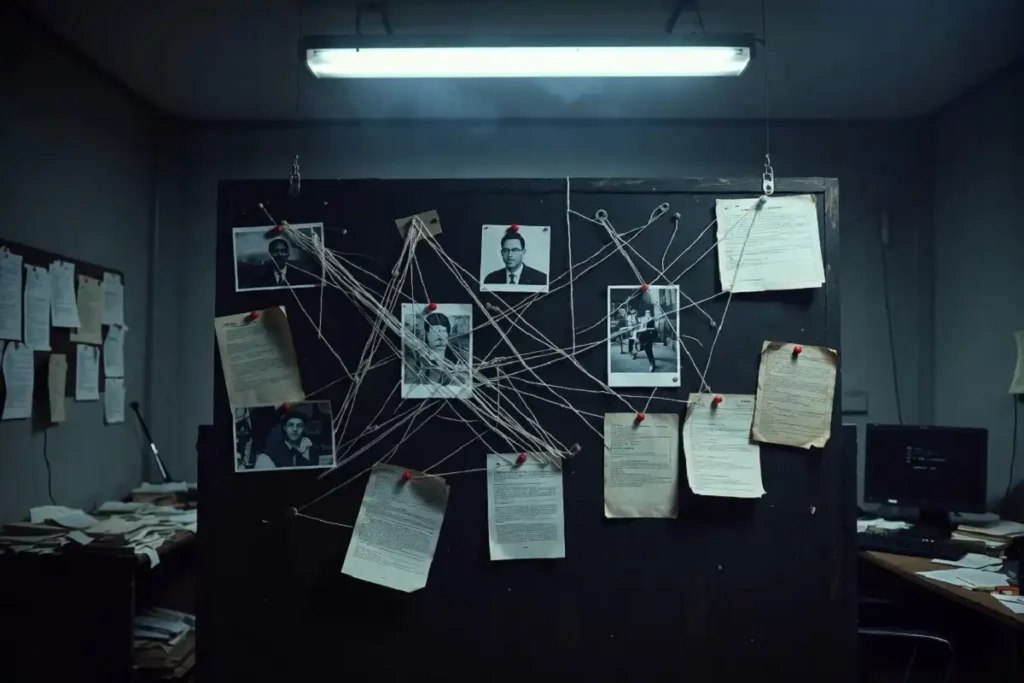
The cinematography by Sujith Sarang is one of the film’s clearest strengths. He uses color grading deliberately to sustain the film’s cold, tension-filled atmosphere. Frames are composed with care, and there is a visual consistency across the film that elevates even its weaker narrative passages. The result is a film that looks and feels like a proper thriller, with imagery that stays with the viewer.
Harshavardhan Rameshwar’s Background Score
Harshavardhan Rameshwar, widely recognized for his work on the Bollywood film Animal, makes his Malayalam debut here as music composer. His background score is arguably one of the film’s most talked-about technical elements. It builds tension effectively across key scenes and includes English-language tracks that fit the film’s international-adjacent aesthetic. The score does occasionally push beyond what the scene on screen demands, but for the most part it performs exactly what a thriller’s music should do: it keeps you engaged.
How Anomie Compares to Recent Malayalam Thrillers
Malayalam cinema has produced several strong crime and thriller films in recent years, with audiences increasingly drawn to smart, well-crafted genre stories. Anomie attempts to occupy a specific space: a psychologically layered thriller with a scientific twist, positioned somewhat between a procedural and a personal drama.
Fans of intense Malayalam narratives who enjoyed the controlled tension of Drishyam 3 will notice that Anomie aims for a very different tone, one that is more stylized and less grounded. While that film drew power from its deeply human story, Anomie reaches for a darker, more cerebral mood.
For viewers who followed Vaazha 2 and appreciated the kind of fresh storytelling that has energized Malayalam cinema lately, Anomie offers a reminder that ambitious ideas still need sturdy execution to fully land.
Those curious about larger-scale Malayalam productions might also want to check out the preview of Kathanar to see how the industry is expanding into mythology and period fantasy alongside contemporary thrillers like this one.
The film also draws comparison to international crime thrillers in its stylistic approach. For readers who enjoy exploring the genre more broadly, IMDb’s Malayalam thriller category offers a useful reference for films in this space. Audiences familiar with the work of authors like Minette Walters or filmmakers who shaped modern psychological thrillers will find familiar DNA in Anomie’s structure, even if the execution does not always match those benchmarks. The Criterion Collection’s genre film guides also offer useful context for readers interested in the broader history of crime and psychological thriller cinema.
What Works and What Does Not
What works:
- Bhavana’s assured and emotionally grounded performance throughout
- Sujith Sarang’s cinematography and visual atmosphere
- The villain’s philosophical framework, which is genuinely fresh
- Harshavardhan Rameshwar’s background score and use of music to build tension
- The film’s ambition to blend medical science with investigation drama
What could have been better:
- The first half’s pacing, which slows the film’s momentum early on
- Rahman’s performance in key emotional scenes in the first half
- Action sequences in the second half that feel like narrative padding
- A climax that does not fully match the potential of the setup
- Reliance on familiar thriller genre conventions in the screenplay’s middle section
FAQ About Anomie
What is the plot of Anomie?
Anomie follows Zara, a forensic expert whose brother goes missing under suspicious circumstances. While she conducts her own investigation, police officer Ghibran leads an official inquiry. The two investigations eventually merge, uncovering a serial killer targeting people with specific psychological vulnerabilities.
Who directed Anomie?
Riyas Marath directed Anomie, marking his debut as a film director. He had previously co-written scripts for other Malayalam productions before stepping behind the camera for this project.
Is Anomie Bhavana’s comeback film in Malayalam?
Yes, Anomie marks Bhavana’s return to the Malayalam film industry after a gap. She had last appeared in a Malayalam film with Hunt. Her performance in this film has been widely noted as one of its stronger elements.
What genre does Anomie belong to?
Anomie is a psychological crime thriller with elements of science fiction. It blends an investigation-driven narrative with themes rooted in medical science and sociology, giving it a slightly unusual genre identity compared to most Malayalam thrillers.
Who composed the music for Anomie?
Harshavardhan Rameshwar composed the background score and music for Anomie. He is well known for his work in Bollywood, particularly for the film Animal. Anomie marks his debut as a composer in Malayalam cinema.
What is the runtime of Anomie?
Anomie has a runtime of 152 minutes, making it a moderately long film. Some viewers have noted that tighter editing, particularly in the first half, could have improved the overall pace.
Is Anomie available on OTT?
At the time of writing, Anomie had been released theatrically in February 2026. An official OTT release date had not been widely confirmed. Keep an eye on major streaming platforms for updates on its digital availability.
Is Anomie worth watching in theaters?
Anomie is worth watching for viewers who enjoy atmospheric, stylized thrillers with strong technical craft. The visuals and music are best experienced on a large screen. However, if you prefer tightly written genre films with consistent pacing, you may find certain sections less satisfying.
Conclusion
Anomie is a film with real ambition and several genuinely strong elements. Bhavana’s performance, the striking cinematography, and the freshness of the villain’s conceptual framework make it a worthwhile watch for fans of Malayalam crime cinema. At the same time, its screenplay struggles to fully harness the potential of its central idea, and certain choices in the second half undercut the tension the film builds up in its better moments.